



- Home
- Hearing Loss
- Hearing Aid Use And Care
How AUSTAR Hearing's High-Frequency Real-Ear Reconstruction Solves Steeply Sloping Hearing Loss
2026-08-18If you or a loved one have ever felt that wearing hearing aids makes high-pitched sounds screechy, unnatural, or simply impossible to understand, you are not alone. For individuals with steeply sloping hearing loss—where low-frequency hearing remains relatively good but high-frequency sounds drop off drastically—traditional hearing aids often fall short. They either cannot provide enough high-frequency gain or cause unbearable feedback and distortion.
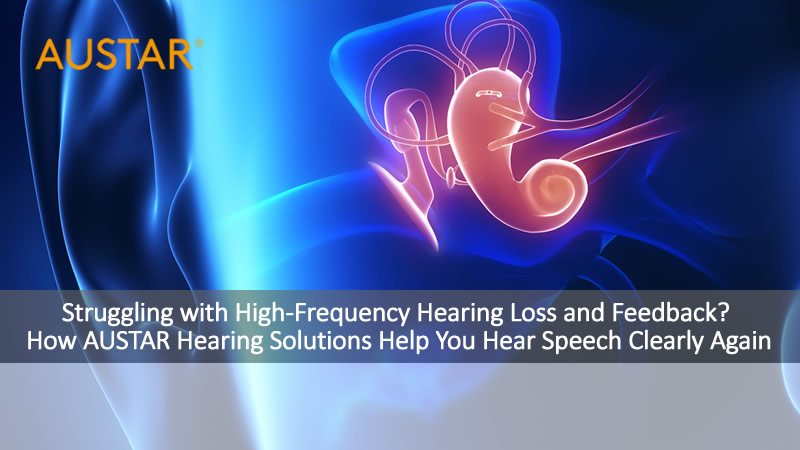
To address this challenge, modern acoustic engineering relies on frequency lowering technology. But how does it work, and what makes advanced solutions like AUSTAR Hearing's proprietary technology different?
Understanding the Challenge: Why Steeply Sloping Hearing Loss is Hard to Fit
In standard audiometric testing, some patients exhibit a steeply sloping hearing curve where adjacent test frequencies differ by more than 20 dB. In these cases, the ear requires minimal amplification for low-to-mid frequencies, but massive amplification for high frequencies.
Standard hearing aids struggle here. Pushing traditional amplifiers to compensate for severe high-frequency loss frequently results in acoustic feedback, sound distortion, and harsh noises that irritate the user rather than helping them understand speech.
How Traditional Frequency Shifting Works (And Its Limitations)
To bypass damaged high-frequency regions, conventional hearing aids use frequency transposition. When activated, sounds above a certain cutoff point (for example, 3 kHz) are compressed or shifted down into a healthier mid-frequency region (such as 2.5 kHz) where the user's hearing is better.
While this makes high-pitched sounds audible again, it comes with a major trade-off: sound distortion. The lower the cutoff point, the more aggressive the shifting process, leading to unnatural-sounding speech. As a result, users usually require a gradual, customized adjustment period to adapt.
The AUSTAR Hearing Solution: High-Frequency Real-Ear Reconstruction
To overcome the distortion flaws of traditional methods, AUSTAR Hearing developed a specialized frequency-lowering technology tailored for complex acoustic environments: High-Frequency Real-Ear Reconstruction.
Compared to legacy systems, this proprietary technology delivers distinct clinical and experiential advantages:
- Maximum Sound Fidelity: It significantly preserves the natural timbre and quality of the original sound, minimizing unnatural artifacts.
- Customizable Amplification Control: Audiologists can selectively choose whether to continue amplifying the source frequency band even after shifting, providing a more flexible fitting process.
- Enhanced Speech Clarity: Designed to optimize speech perception, it helps users distinguish consonants and high-pitched words without the harshness associated with standard compression.
Empowering Better Audiological Outcomes
Hearing aid fittings for complex configurations require both precision and comfort. By integrating High-Frequency Real-Ear Reconstruction into AUSTAR Hearing devices, hearing care professionals can offer more effective, science-backed solutions for users dealing with severe high-frequency attenuation.
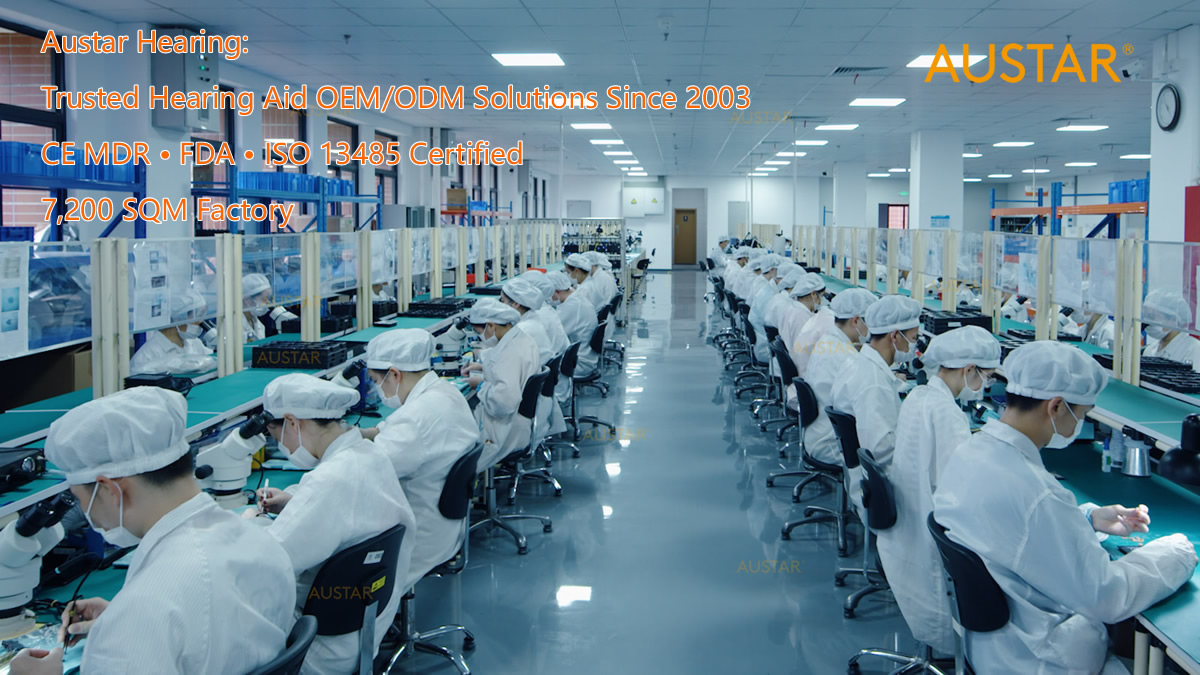
For more information on our OEM/ODM hearing aid technologies and device specifications, visit our official AUSTAR Hearing website or contact our technical support team.


Latest
- How AUSTAR Hearing's High-Frequency Real-Ear Reconstruction Solves Steeply Sloping Hearing Loss
- Custom vs BTE Hearing Aids: Which Style Suits You Best?
- How to Choose the Right Hearing Aid: A Professional Fitting Guide
- 4 Essential Communication Rules for Family Members of Hearing Aid Users
- Hearing Aid "Break-In Period": Say Goodbye to Discomfort, Hello to Clear Sound
Hearing Aid Use And Care

All 0 comments