


How AUSTAR Hearing's High-Frequency Real-Ear Reconstruction Solves Steeply Sloping Hearing Loss
If you or a loved one have ever felt that wearing hearing aids makes high-pitched sounds screechy, unnatural, or simply impossible to understand, you are not alone. For individuals with steeply sloping hearing loss—where low-frequency hearing remains relatively good but high-frequency sounds drop off drastically—traditional hearing aids often fall short. They either cannot provide enough high-frequency gain or cause unbearable feedback and distortion.
To address this challenge, modern acoustic engineering relies on frequency lowering technology. But how does it work, and what makes advanced solutions like AUSTAR Hearing's proprietary technology different?
Understanding the Challenge: Why Steeply Sloping Hearing Loss is Hard to Fit
In standard audiometric testing, some patients exhibit a steeply sloping hearing curve where adjacent test frequencies differ by more than 20 dB. In these cases, the ear requires minimal amplification for low-to-mid frequencies, but massive amplification for high frequencies.
Standard hearing aids struggle here. Pushing traditional amplifiers to compensate for severe high-frequency loss frequently results in acoustic feedback, sound distortion, and harsh noises that irritate the user rather than helping them understand speech.
How Traditional Frequency Shifting Works (And Its Limitations)
To bypass damaged high-frequency regions, conventional hearing aids use frequency transposition. When activated, sounds above a certain cutoff point (for example, 3 kHz) are compressed or shifted down into a healthier mid-frequency region (such as 2.5 kHz) where the user's hearing is better.
While this makes high-pitched sounds audible again, it comes with a major trade-off: sound distortion. The lower the cutoff point, the more aggressive the shifting process, leading to unnatural-sounding speech. As a result, users usually require a gradual, customized adjustment period to adapt.
The AUSTAR Hearing Solution: High-Frequency Real-Ear Reconstruction
To overcome the distortion flaws of traditional methods, AUSTAR Hearing developed a specialized frequency-lowering technology tailored for complex acoustic environments: High-Frequency Real-Ear Reconstruction.
Compared to legacy systems, this proprietary technology delivers distinct clinical and experiential advantages:
- Maximum Sound Fidelity: It significantly preserves the natural timbre and quality of the original sound, minimizing unnatural artifacts.
- Customizable Amplification Control: Audiologists can selectively choose whether to continue amplifying the source frequency band even after shifting, providing a more flexible fitting process.
- Enhanced Speech Clarity: Designed to optimize speech perception, it helps users distinguish consonants and high-pitched words without the harshness associated with standard compression.
Empowering Better Audiological Outcomes
Hearing aid fittings for complex configurations require both precision and comfort. By integrating High-Frequency Real-Ear Reconstruction into AUSTAR Hearing devices, hearing care professionals can offer more effective, science-backed solutions for users dealing with severe high-frequency attenuation.

For more information on our OEM/ODM hearing aid technologies and device specifications, visit our official AUSTAR Hearing website or contact our technical support team.



























 CIC Type


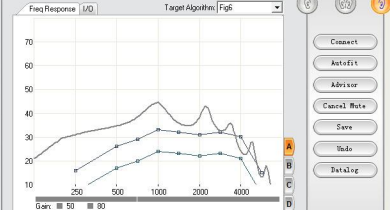
 1.2 Input user's Audiogram and click "Save":


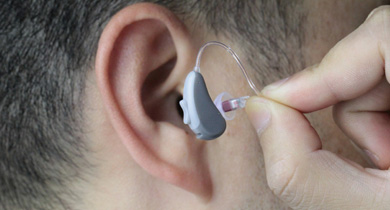
Steps for Wearing RIC Hearing Aid
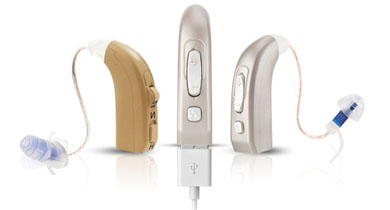
We mentioned last time that Cadenza Y RIC Hearing Aid is one of Austar new launched product in 2020. Today, this article is about Steps for Wearing New RIC Hearing Aid 2020.
One, how to Install Cadenza Y RIC Hearing Aid Battery? The main points are as follows.
1st, Check whether the battery type is correct or not (Battery size:10A).
2nd, Remove the tag on the battery and keep it in the air at least 1 minute.
3rd, Open the battery door gently.
4th, Use the brush's magnet to hold the battery positive and then insert the battery. Should avoid touching battery by hand directly. Insert the battery to ensure the (+) side is at the same side with the “+”printed at the side edge of the battery door.
5th, Brush flat move to the direction of the battery door to separate the battery and brush, then close the battery door.

Two, Power On/Off.
Power On: please just close the battery door.

Power Off: please just open the battery door.

Three, Removing Battery.
Hold down the battery door corner gently with your fingers to open the battery door. After the battery door is fully opened, use the brush's magnet to hold the battery, and then take out the battery. Do not take out the battery directly by hand .
Four, How To Put New RIC Hearing Aid On The Ear?
First, you should choose the appropriate size of eartip and insert it into the connector on tube.

Second, Use fingers to hold the bottom of the sound tube and push the eartip into the canal gently.

Use another hand to pull the auricle backward, rotating the eartip until it reach the right position.

Put the hearing aid behind the ear and closed to the head, hung on the ear properly.

Five, How To Remove the Hearing Aid?
1. Remove the hearing aid from the back of the ear.

2. Hold the bottom of the sound tube and pull gently, take out the ear mold or eartip when loosen.

Have you learned them? If you have questions about the steps or are interested in our New Hearing Aids 2020 products,please feel free to contact us. In addition, our Austar hearing manufacturer provide OEM/ODM sevice.
Can I Get Hearing Aids Over The Counter
Over-The-Counter hearing aids will soon be available for purchase in stores and online without a prescription. The OTC Hearing Aids will provide a wider range of options for adults with mild or mild-to-moderate hearing loss.
Some would agree with this, they said: "The facts are that current developments in digital technology should bring with such progress, truly affordable hearing aids."

But, what are FDA over-the-counter-hearing aids? According to the FDA Reauthorization Act of 2017 (FDARA), we know that:
1. OTC hearing aids will use "same fundamental scientific technology as […] hearing aids"
2. OTC hearing aids will be "available over-the-counter, without the supervision, prescription, or other order, involvement, or intervention of a licensed person, to consumers through in-person transactions, by mail, or online."
3. They will be for adults only (18+ years old)
4. They will provide adequate amplification for mild-to-moderate hearing loss
5. The user will be able to control their OTC hearing aids and customize them as they see fit
6. OTC hearing aids may include self-assessment tests
7. OTC hearing aids may include wireless technologies
 OTC Hearing aids Pros:
It will provide increased access to hearing devices;
eventually lead to the creation of new self-fitting hearing aid technologies by consumer electronics companies;
could lead to more regulation of the DTC hearing aid marketplace.
Cons:
It could put you at risk of improperly treating your hearing loss.
OTC will NOT drive down the costs of current hearing aid technology.
There is no guarantee that your OTC hearing aids will be programmed correctly.
OTC will lead to the demise of bad hearing care providers.
 Any suggestions can give you?
One. Professionally-fitted hearing aids are currently available for purchase through state-licensed audiologists and hearing instrument specialists. The average price for a professionally-fitted hearing aid, including a hearing aid fitting and and follow up care, is $2372, according to a recent Hearing Tracker survey.
Two. For those who can't afford professional hearing aids, please contact Austar Hearing Aids Manufacturer Support. If you are not ready to pursue professionally-fitted hearing aids, but still need help hearing, please
take a look at our product for Direct-to-consumer Hearing Aids and Custom Made Hearing Aids.
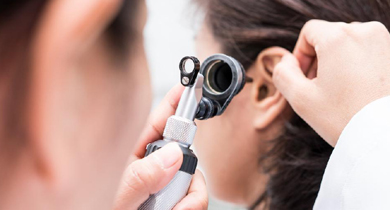
The Benefits of Binaural Hearing Aid Fitting
Many users are recommended to use binaural fitting when choosing hearing aids, which means wearing hearing aids on both ears at the same time.
What are The Benefits of Binaural Hearing Aid Fitting? We hereby list some professional answers as below.

1st, improve the ability of sound localization
Confirming the location of an object, that is, sound localization, helps us to concentrate on a sound or to avoid the interruption from a sound. As an essential ability for survival, it helps us, especially for people with hearing loss, to find the target objective or to avoid danger. 
2nd, improve the ability of speech understanding
When participating in a group conversation, the auricle of a human ear can collect sound and reduce noise. Binaural hearing makes the two auricles work together, which can magnify the sound loudness and reduce the noise in environment. It helps enhance the speech understanding in both quiet environment and noisy environment.
It is a great significance to improve the SNR(signal-to-noise ratio), that is, to improve the speech discrimination ability in a noisy environment, which helps people with hearing loss to participate in varies of group conversations.
3rd, improve sound quality and listening comfort Binaural hearing brings the sound localization, accumulation, noise reduction, and fusion , improving the sound quality, listening comfort of the sound, and the perception of music.
If you have any questions about Binaural Hearing Aids Price please feel free to contact us.
Austar Manufacturer: Floors 1,2,4 and 5, Building B8, Biomedical Industrial Park, No.2064 Wengjiao West Road, Haicang District, Xiamen
URL: https://www.austar-hearing.net/
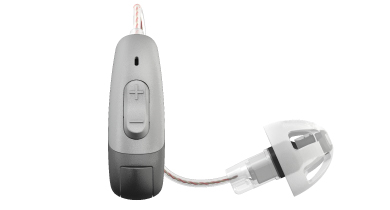
Austar Hearing Aid 2020 New Release Cadenza Y RIC
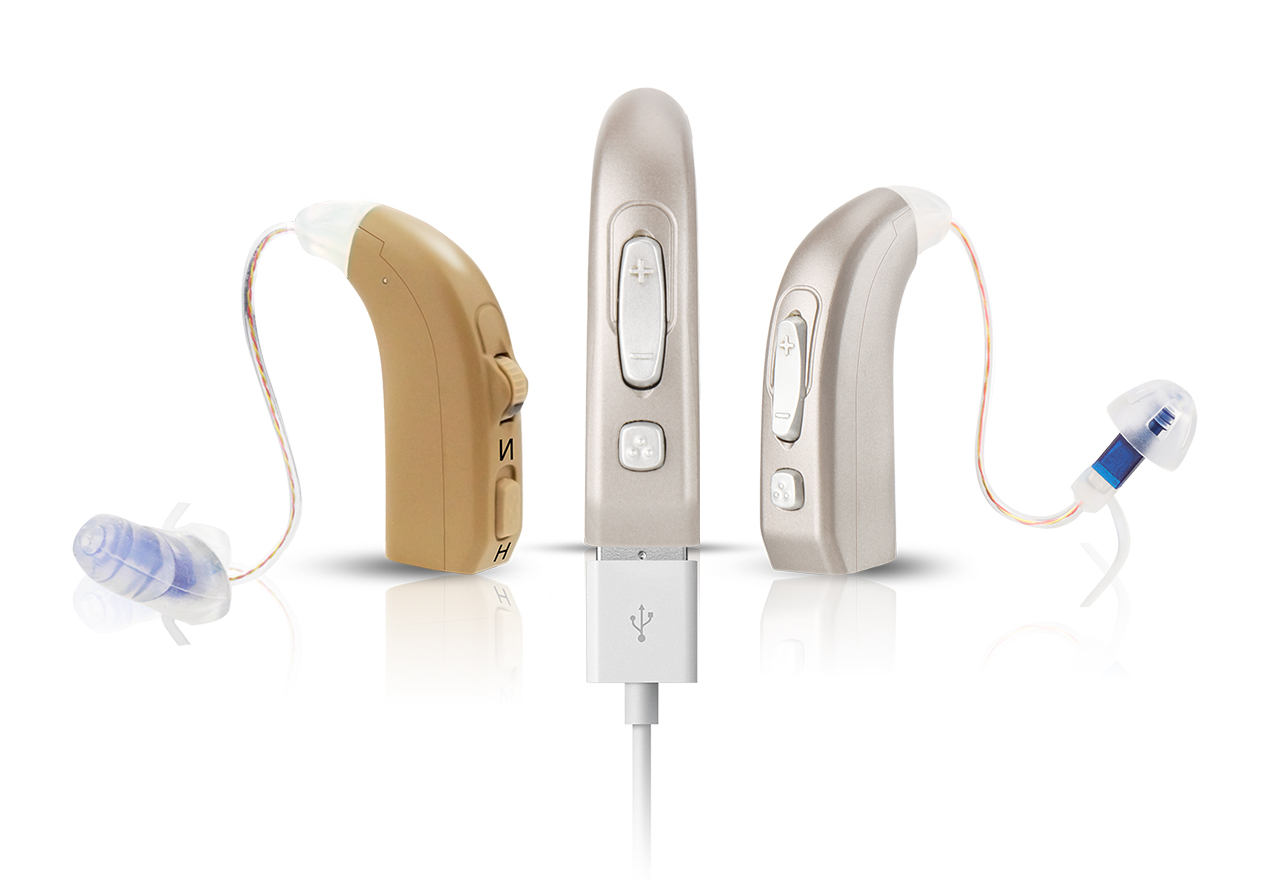
Cadenza Y RIC Hearing Aid is one of 2020 Austar New Release product. It is new toggle-switch RIC instrument. The high quality components are provided by the top suppliers from Europe and America. Every hearing aid has been passed the strictly quality inspection to make sure the device in perfect performance.
Toggle-switch Cadenza Y RIC hearing aid is a full digital and intelligent hearing aid, with 2 signal processing channels, intelligent adaptive noise reduction system high-effective adaptive feedback suppression function. Toggle-switch RIC hearing aid helps user not only enjoy a clear hearing under quiet environment, but also in noisy environment.

The 2020 New RIC Hearing Aid design show the new trend of BTE hearing aid, it meet the Ergonomics theory with comfortable wearing and Powerful functions.

You may be interested in the New toggle-switch Cadenza Y RIC hearing aid Release Date and price, Please stay tuned for more information about the Austar 2020 New Release.